UFC Fight Night: Bautista vs Oliveira Welterweight Bout Alex Morono vs Daniel Donchenko
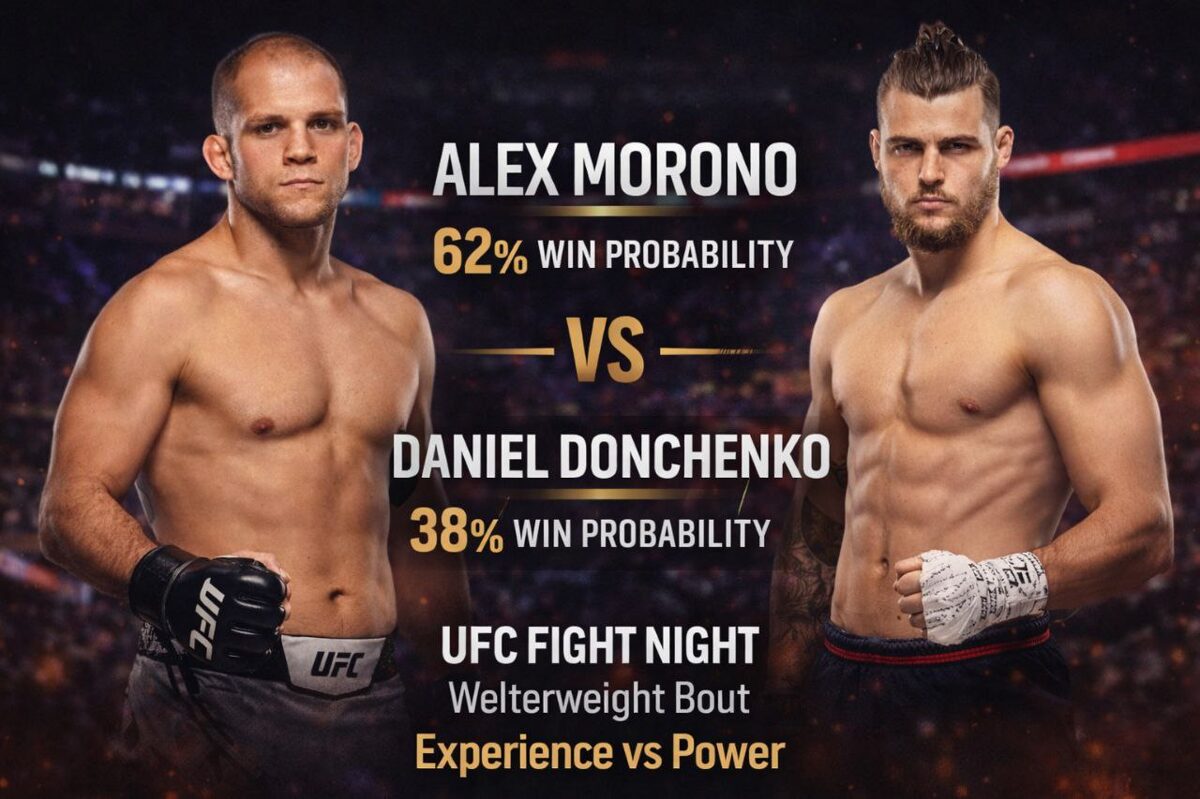
This welterweight matchup brings together experience and unpredictability against emerging structure and physical upside. Alex Morono enters the fight as a seasoned UFC veteran with extensive octagon time against a wide range of styles. Known for his unconventional striking rhythm, pressure-heavy approach, and durability, Morono often thrives in chaotic exchanges. His strength lies in disrupting opponents’ timing, forcing uncomfortable fights, and capitalizing on mistakes in close-range scenarios. While not the most technical striker, his adaptability and fight IQ allow him to remain competitive across multiple phases of the bout.
Daniel Donchenko represents a more structured and disciplined profile. With a strong athletic base and cleaner technical fundamentals, Donchenko prefers controlled exchanges, distance management, and methodical pressure. His striking is more linear and composed, relying on positioning, defensive awareness, and calculated offense rather than volume chaos. Compared to Morono, he brings fewer UFC appearances but compensates with physical freshness and tactical patience.
Stylistic Breakdown
- Pace & Chaos: Advantage Morono
- Structure & Control: Advantage Donchenko
- Experience Under Pressure: Strong edge for Morono
- Technical Cleanliness: Slight edge for Donchenko
Fight Dynamics
he key variable in this matchup is tempo. If the fight becomes messy and scrappy, Morono’s experience and unorthodox style could tilt exchanges in his favor. If Donchenko manages distance effectively and keeps the fight at a measured pace, his technical discipline and physical attributes may neutralize Morono’s disruption tactics. This bout is likely to be decided by who successfully imposes their preferred rhythm rather than raw power or single-moment explosiveness. Overall Outlook: A competitive welterweight contest defined by contrast in style—experience and chaos versus structure and control—where small tactical adjustments may determine the outcome over time rather than early dominance.
Said Nurmagomedov vs Javid Basharat
UFC Fight Night: Bautista vs Oliveira
1. Fight Context
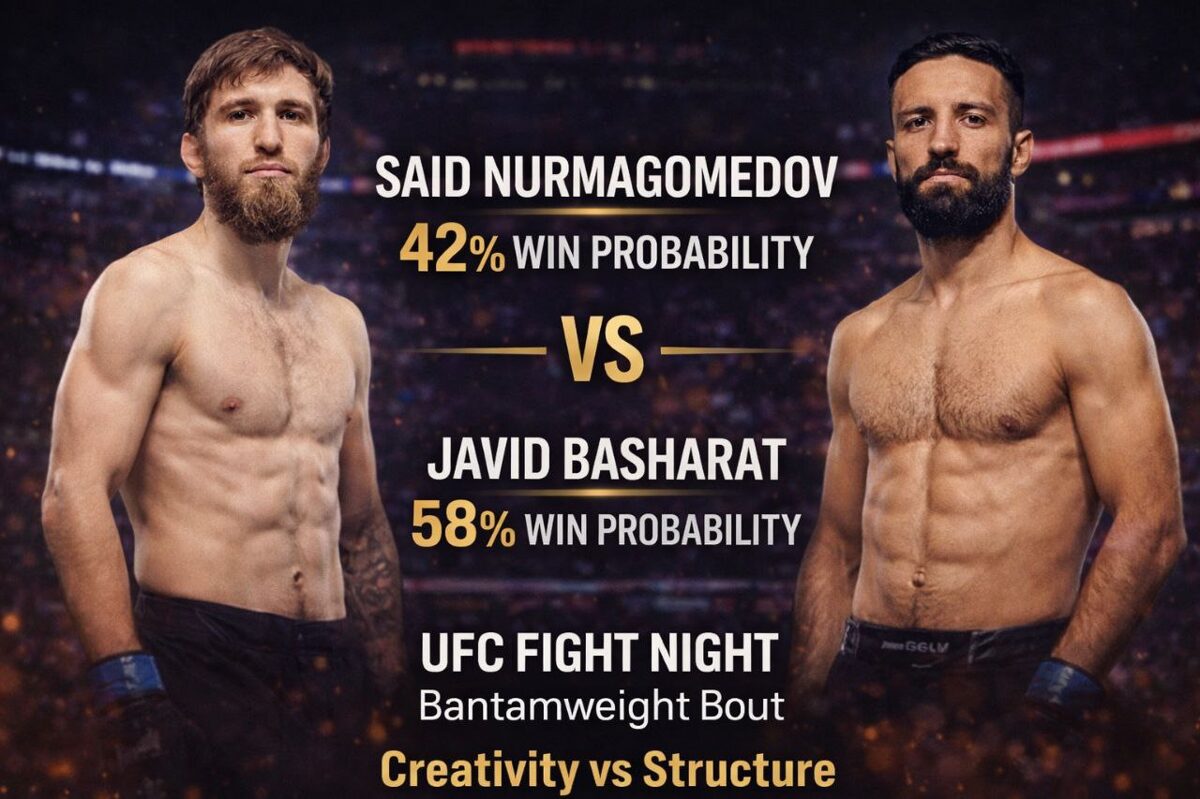
This matchup represents a high-level technical clash between two disciplined fighters with contrasting approaches. It is not a chaos-based fight, but a battle of control, rhythm, and decision-making. The outcome will depend on who successfully imposes their structure rather than raw aggression.
- 2. Fighter Profiles
- Said Nurmagomedov
- Style: Creative striker with submission threats
- Key Strengths:
- Dynamic footwork and unpredictable movement
- Unorthodox striking (spinning attacks, sudden kicks)
- Dangerous in transitions and scrambles
- Vulnerabilities:
- Can lose round-by-round consistency
- Relies heavily on moments rather than sustained pressure
- Pace management can fluctuate
- Said is a momentum-based fighter. He does not dominate through volume but remains a constant finishing threat due to creativity and timing.
- Javid Basharat
- Style: Structured, system-oriented MMA
- Key Strengths:
- Strong distance control
- Clean, efficient striking with minimal risk
- Tactical discipline and defensive awareness
- Vulnerabilities:
- Lower finishing frequency
- Conservative approach can result in close rounds
- Less explosive in exchanges
- Basharat fights with control and patience. His objective is to limit chaos, dictate pace, and accumulate winning rounds.
- 3. Stylistic Matchup
- Creativity vs Structure
- Explosiveness vs Consistency
- Moment-based offense vs Round control
- The central question of the fight:
- Can Basharat maintain distance and tempo long enough to neutralize Nurmagomedov’s unpredictability?
- 4. Key Fight Variables Pace
- High, steady pace favors Basharat
- Irregular, broken rhythm favors Nurmagomedov
- Distance Management
- Controlled mid-to-long range favors Basharat
- Close-range exchanges and sudden entries favor Nurmagomedov
- Fight Outcome Pathways
- Decision-based fight favors Basharat
- Finish or sudden momentum shift favors Nurmagomedov
- 5. Win Probability Estimate
- Javid Basharat — ~55–58%
- Said Nurmagomedov — ~42–45%
- Basharat holds a slight edge due to structural consistency, while Nurmagomedov maintains significant finishing upside throughout the fight.
- 6. Final Assessment
- This is a high-skill matchup with a narrow margin between fighters. Basharat is more likely to succeed if the fight remains tactical and controlled. Nurmagomedov becomes increasingly dangerous as the structure breaks down.
- Fight Type: Technical, methodical
- Risk Level: Medium–High
- Deciding Factor: Tempo and distance control
Muin Gafurov vs Jakub Viklach
Event: UFC Fight Night: Bautista vs. Oliveira
- Fighter Profiles
- Muin Gafurov
- Record: 20–6
- Style: Pressure-based fighter / grappling-oriented
- Base: Wrestling, clinch control, ground pressure
- Gafurov is a physically strong flyweight who relies on forward pressure and positional control. His game is built around closing distance, forcing clinch exchanges, and securing takedowns to slow the pace. He is not a volume striker, but instead focuses on control, strength, and wearing opponents down over time.
- Jakub Viklach
- Record: 17–3–2
- Style: Technical striker / submission-aware grappler
- Base: Kickboxing, Brazilian Jiu-Jitsu
- Viklach is a composed and technically refined fighter. He prefers to operate at range, using footwork, timing, and clean combinations to manage distance. On the ground, he is comfortable in scrambles and shows good submission awareness, especially when opponents overcommit.
- Stylistic Matchup
- This matchup is a contrast between pressure and control versus technique and movement.
- Gafurov will look to push forward, cut the cage, and force physical exchanges.
- Viklach aims to stay mobile, punish entries with precise strikes, and exploit transitions if the fight goes to the ground.
- The outcome depends on whether Gafurov can consistently impose his physical game without absorbing sustained damage.
- Key Fight Factors
- 1. Range Management
- Viklach’s effectiveness increases significantly if he controls distance and tempo.
- 2. Takedown Success Rate
- Gafurov needs clean takedowns and extended control — failed attempts favor Viklach.
- 3. Grappling Transitions
- Viklach has an edge in dynamic scrambles and submission opportunities.
- 4. Pace Over Three Rounds
- If Gafurov’s pressure slows, Viklach gains a clear advantage late.
- Gafurov Path to Victory:
- Clinch-heavy fight, multiple takedowns, positional dominance, decision win.
- Viklach Path to Victory:
- Cleaner striking at range, damage accumulation, possible submission or clear decision.
- Win Probability (Estimated)
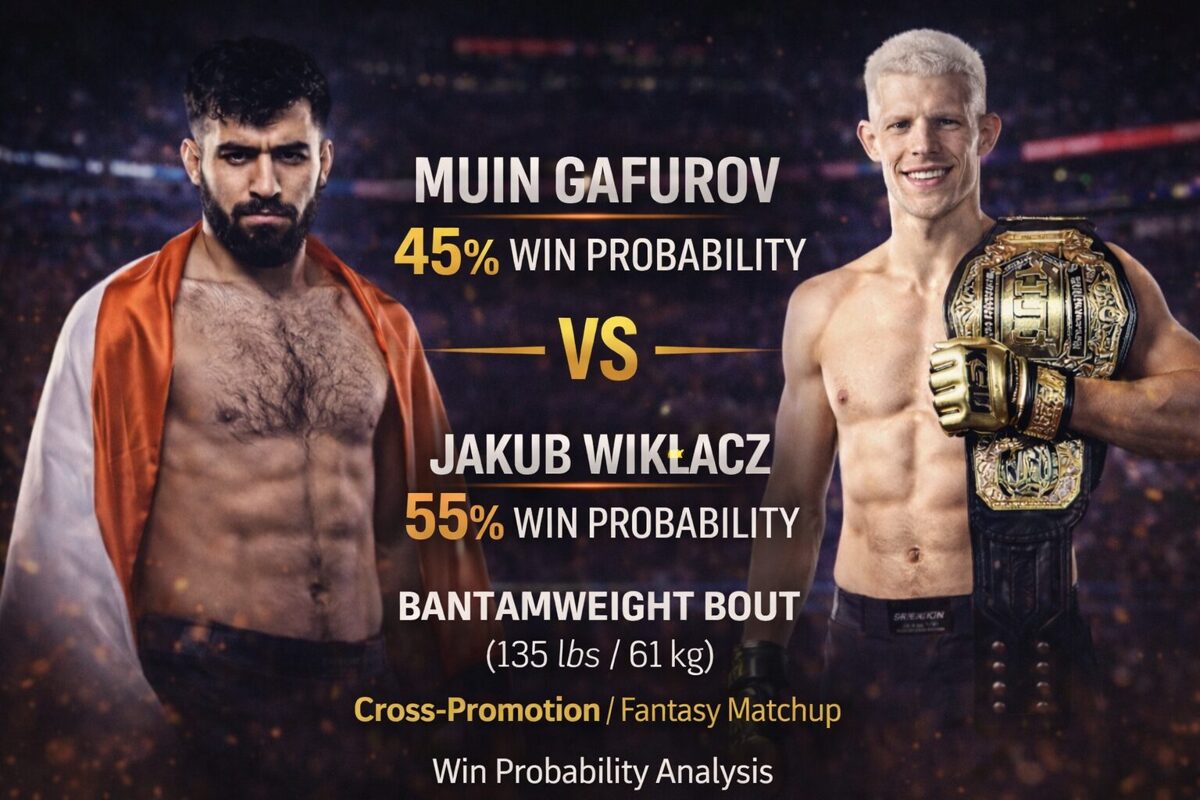
- Jakub Viklach — 55%
- Muin Gafurov — 45%
- This is a competitive fight, but Viklach’s versatility, movement, and technical precision provide a slight edge.
- Final Outlook
- Expect a tactical bout with shifts in momentum. Gafurov’s pressure will test Viklach early, but over three rounds, efficiency and adaptability are likely to be decisive.
- Projected edge: Jakub Viklach (narrow).